
As remote work becomes a staple in the global job market, Vietnamese developers are positioned to thrive. With strong technical skills and a willingness to adapt, they are ready to meet the demands of international companies. However, challenges such as cultural adaptation and infrastructure must be addressed to ensure successful remote collaboration.
Are Vietnamese Developers Ready to Work Remotely for International Companies?
In the ever-evolving landscape of IT and technology, remote work has emerged as a pivotal trend. With international companies increasingly seeking global talent, a pressing question arises: Are Vietnamese developers ready to embrace this new way of working? For developers, adapting to remote work could open doors to lucrative opportunities worldwide, while for employers, the challenge lies in ensuring productivity and seamless collaboration with a geographically dispersed team.

The Growing Demand for Remote Work
Remote work is no longer a temporary solution but a permanent fixture in the professional world. International companies are on the lookout for skilled developers who can work remotely, saving costs and fostering diversity in their teams. Vietnamese developers, known for their technical prowess and dedication, are prime candidates for these roles. However, are they prepared to meet the demands of remote work?
Technical Proficiency and Skill Set
Vietnamese developers possess strong technical skills, with a solid foundation in programming languages, frameworks, and tools that are in high demand globally. Their education system emphasizes STEM (Science, Technology, Engineering, Mathematics), preparing them well for the challenges of the IT industry. Furthermore, many developers continually upskill through online courses and certifications.
Adapting to Remote Work Culture
While technical skills are crucial, adapting to the culture of remote work is equally important. This includes effective communication, time management, and self-discipline. Vietnamese developers are known for their adaptability and eagerness to learn, traits that are beneficial in a remote work setting. Companies can support this transition by offering training and resources that focus on remote work best practices.
Challenges in Remote Work Transition
Despite the potential, transitioning to remote work is not without challenges. Vietnamese developers may face obstacles such as language barriers, cultural differences, and the need for reliable internet infrastructure. Employers need to address these issues by providing language support, cultural training, and ensuring technical setups are robust and secure.
The Role of Employers in Facilitating Remote Work
For successful remote collaboration, international companies must play an active role. This includes setting clear expectations, providing regular feedback, and fostering a sense of community among remote teams. Leveraging technology such as collaboration tools and platforms can bridge the gap, making the transition smoother for Vietnamese developers.
Opportunities and Benefits
The benefits of remote work are manifold for Vietnamese developers. They gain access to higher-paying jobs, exposure to international projects, and the flexibility to balance work with personal commitments. For companies, hiring Vietnamese talent means tapping into a pool of dedicated and skilled professionals, enriching their teams with diverse perspectives.

More than 1500 employers trust Devwork for their recruitment needs:
Cost optimization - Save time - Professional quality
Sign up for Devwork today to increase your company's competitiveness.
Or contact us
Email: hello@devworkx.vn
Tag Cloud:
Author: Trần Huy Hoàng


Related Articles

Hiring Vietnamese Developers: What Skills Can International Companies Expect?
This article explores the skills and strengths that Vietnamese developers bring to international companies, highlighting their technical prowess, adaptability, and collaborative spirit. It also addresses potential challenges and provides insight into leveraging this talent for global success....
How to Assess the English and Technical Skills of Vietnamese Developers
This article provides a detailed guide on assessing the English and technical skills of Vietnamese developers, highlighting evaluation methods, the importance of soft skills, and the benefits of partnering with local recruitment agencies. It also introduces devworkx.com as a platform for efficient IT recruitment.

Vietnamese Software Engineers: Technical Skills, English and International Work Experience
This article explores the technical skills, English proficiency, and international work experience of Vietnamese software engineers, highlighting their strengths and the challenges they face in the global IT market. It provides insights into their educational background, language efforts, and the value of international exposure.

Why Vietnamese Developers Are a Popular Choice for Remote IT Teams
This article explores why Vietnamese developers are highly sought after for remote IT teams, highlighting their education, cost-effectiveness, work ethic, and adaptability. It also introduces devworkx.com as a platform to connect with Vietnamese tech talent.

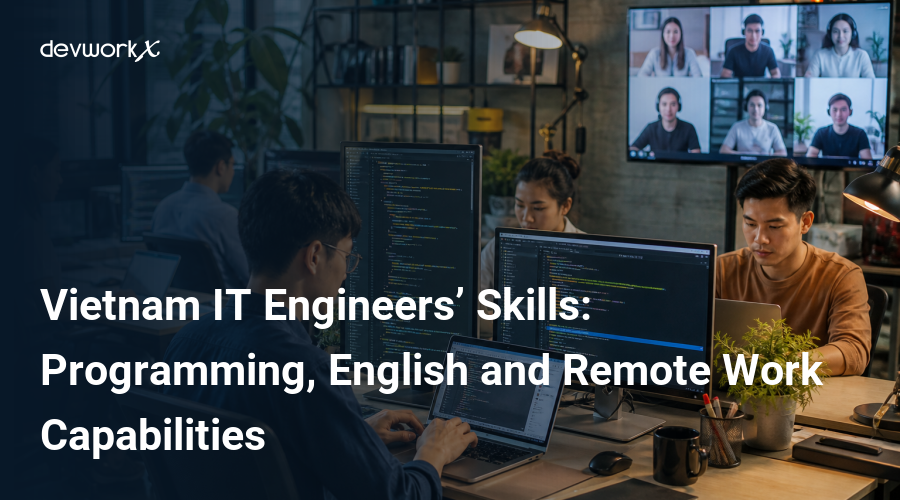
Vietnam IT Engineers’ Skills: Programming, English and Remote Work Capabilities
Bài viết này phân tích chi tiết về các kỹ năng nổi bật của kỹ sư IT Việt Nam, bao gồm lập trình, tiếng Anh và khả năng làm việc từ xa. Những kỹ năng này không chỉ giúp họ nổi bật trong nước mà còn mở ra nhiều cơ hội trên thị trường quốc tế.

How to Prevent Knowledge Silos in Software Development Teams
This article explores the detrimental effects of knowledge silos in software development teams and provides detailed strategies to prevent them. By fostering collaboration, implementing sharing platforms, and encouraging continuous learning, teams can enhance productivity and innovation. Discover how platforms like devworkx.com can support these initiatives.