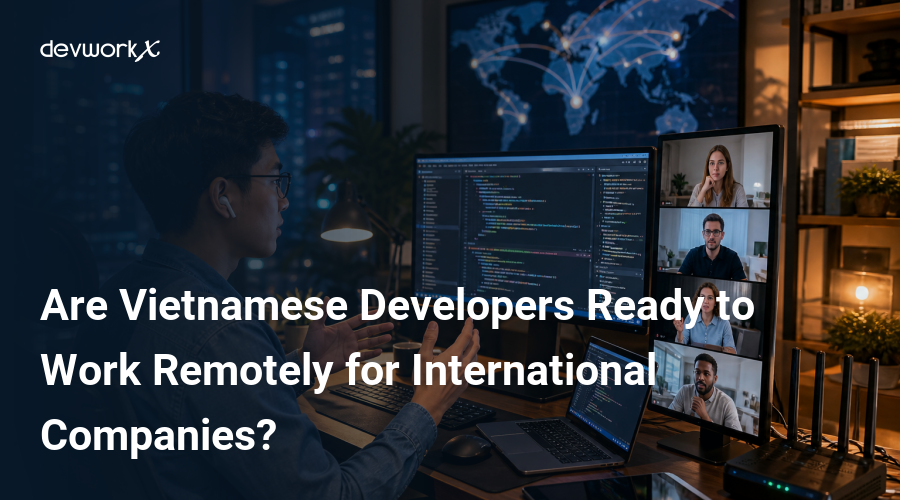
This article explores whether Vietnamese developers are prepared for remote work with international companies. It examines educational backgrounds, challenges like communication and infrastructure, and the opportunities remote work presents, such as access to global markets and skill enhancement.
Introduction: Are Vietnamese Developers Ready to Work Remotely for International Companies?
The IT industry is constantly evolving, and one of the most significant shifts in recent years is the move towards remote work. For Vietnamese developers, this transition presents both challenges and opportunities. While the allure of working for international companies is strong, questions remain about readiness and adaptability. This article delves into whether Vietnamese developers are truly prepared to embrace remote work for global firms.

The Current Landscape of Vietnamese Developers
Education and Skill Level
Vietnamese developers have access to a robust educational framework, with universities offering strong computer science and engineering programs. This educational background provides a solid foundation for remote work, especially for international companies looking for skilled talent. Furthermore, many developers pursue additional certifications and online courses to stay updated with the latest technologies.
Technical skills are not the only focus; Vietnamese developers are also encouraged to enhance their soft skills, such as communication and teamwork. These skills are crucial in a remote work environment, where clear communication and collaboration are key.
Moreover, the Vietnamese IT community is thriving, with numerous tech meetups and conferences that foster continuous learning and networking. This community-centric approach helps developers stay connected and share knowledge, further enhancing their readiness for remote work.
Despite the strengths, there are gaps in advanced technologies and specialized fields where Vietnamese developers may need further development to meet international standards. Addressing these gaps through targeted training and mentorship can significantly boost their readiness for remote roles.
Challenges Faced by Vietnamese Developers in Remote Work
Communication Barriers
One of the primary challenges for Vietnamese developers working remotely with international companies is language proficiency. While many developers possess a functional level of English, there may be difficulties in nuanced communication, especially in technical discussions or when dealing with complex project requirements.
Time zone differences also pose a communication challenge. Coordination across different time zones can lead to delays and miscommunications, affecting project timelines and team dynamics.
Cultural differences can further complicate communication. Understanding and adapting to different work cultures and expectations is essential for successful remote collaboration.
To overcome these communication barriers, companies can invest in language training and cultural workshops, enabling developers to communicate more effectively and confidently with their international counterparts.
Technological Infrastructure
Vietnam’s technological infrastructure is developing rapidly, but there are still challenges that need addressing. Reliable internet connectivity is crucial for remote work, and while urban areas are well-equipped, rural areas may still face connectivity issues.
Access to modern technology and tools is another consideration. Developers need access to the latest hardware and software to perform efficiently and meet international standards.
Cybersecurity is a growing concern for remote work. Developers must be equipped with knowledge and tools to ensure secure communication and data protection when working with international companies.
Government initiatives and investments in improving the country's technological infrastructure are promising steps toward overcoming these challenges, ensuring Vietnamese developers have the necessary resources for remote work.
Work-Life Balance
Remote work blurs the lines between personal and professional life, posing challenges to maintaining a healthy work-life balance. Vietnamese developers may find it difficult to establish boundaries, leading to burnout and decreased productivity.
Creating a structured schedule and dedicated workspace can help in maintaining a balance. Additionally, companies should encourage regular check-ins and mental health resources to support their remote workforce.
Adjusting to the flexibility of remote work can also be challenging. Developers need to develop self-discipline and time management skills to adapt successfully to this new way of working.
By fostering a supportive work environment and promoting a healthy work-life balance, developers can thrive in remote roles, enhancing their readiness for international opportunities.
Adapting to Remote Work Culture
Remote work culture differs significantly from traditional office environments. Vietnamese developers may need to adjust to less structured environments, relying more on self-motivation and initiative.
Building trust and rapport with international teams is crucial. Developers must be proactive in communication and collaboration, demonstrating their reliability and commitment to the team.
Embracing new tools and technologies for remote collaboration is essential. Developers should familiarize themselves with various project management and communication tools to enhance productivity and team coordination.
Encouraging a culture of continuous learning and adaptability can help developers navigate the challenges of remote work culture, making them valuable assets to international companies.
Opportunities for Vietnamese Developers in Remote Work
Access to International Job Markets
Remote work opens doors to global job markets, providing Vietnamese developers with opportunities to work with leading international companies and diverse teams.
This exposure enables developers to gain valuable experience and insights into different industries and technologies, enhancing their professional growth and career prospects.
Competitive salaries offered by international companies can significantly improve the standard of living for Vietnamese developers, making remote work an attractive option.
Additionally, working remotely for international firms can lead to potential relocation opportunities, allowing developers to experience new cultures and expand their professional networks.
Flexibility and Autonomy
Remote work offers greater flexibility and autonomy, allowing developers to tailor their work schedules to suit their preferences and lifestyle.
This flexibility can lead to increased job satisfaction and motivation, as developers have more control over their work environment and time management.
Autonomy in remote work encourages creativity and innovation, enabling developers to approach problem-solving with fresh perspectives and ideas.
By embracing the flexibility and autonomy of remote work, Vietnamese developers can enhance their productivity and job satisfaction, positioning themselves as valuable contributors to international teams.
Enhancing Technical and Soft Skills
Working with international companies exposes Vietnamese developers to new technologies and industry best practices, enhancing their technical skills and knowledge.
Collaboration with diverse teams helps developers improve their soft skills, such as communication, teamwork, and cultural awareness, which are essential for remote work success.
Engagement in international projects challenges developers to think critically and adapt to different work styles, fostering personal and professional growth.
By continuously enhancing their skills, Vietnamese developers can remain competitive and attractive to international employers, opening up more remote work opportunities.
Building a Global Professional Network
Remote work allows developers to build a global professional network, connecting with industry leaders and peers from around the world.
These connections can lead to new opportunities, collaborations, and knowledge-sharing, enriching developers' professional journeys.
Participating in international communities and forums enables developers to stay updated with industry trends and developments, further enhancing their expertise and marketability.
Building a strong global network can provide Vietnamese developers with a competitive edge, increasing their visibility and attractiveness to international companies.
In conclusion, Vietnamese developers are well-positioned to take advantage of the growing trend of remote work for international companies. However, addressing challenges such as communication barriers, technological infrastructure, and adapting to remote work culture is crucial for their success. With the right support and resources, Vietnamese developers can thrive in remote roles, contributing to the global IT industry.
For those looking to connect with talented Vietnamese developers ready for remote opportunities, devworkx.com offers a comprehensive platform that bridges the gap between developers and international companies. Explore the potential and discover the diverse pool of skilled professionals ready to make an impact on a global scale.

More than 1500 employers trust Devwork for their recruitment needs:
Cost optimization - Save time - Professional quality
Sign up for Devwork today to increase your company's competitiveness.
Or contact us
Email: hello@devworkx.vn
Tag Cloud:
Author: Trần Huy Hoàng


Related Articles

How to Hire Software Engineers in Vietnam: A Complete Guide
This comprehensive guide explores the nuances of hiring software engineers in Vietnam, covering the IT landscape, recruitment strategies, and retention practices. By understanding cultural and logistical factors, companies can effectively tap into Vietnam's skilled talent pool and build successful teams....
How to Find and Hire Senior Developers in Vietnam
This article provides an in-depth guide on finding and hiring senior developers in Vietnam, covering the challenges and strategies for recruitment in a competitive tech market. It also emphasizes the importance of understanding local cultural factors and offers insights into retaining top talent.

Vietnam IT Talent Market: Skills, Salaries and Hiring Trends
Explore Vietnam's IT talent market, focusing on key skills, salary trends, and hiring practices. This detailed analysis provides insights into what makes the market dynamic and how professionals and employers can thrive.

Why Companies Choose Vietnamese Developers for Remote IT Teams
This article explores the reasons why companies are increasingly choosing Vietnamese developers for remote IT teams, highlighting their technical skills, cost-effectiveness, work ethic, and the growing IT ecosystem in Vietnam.


How to Hire Vietnamese Developers for International Companies
This article explores the strategies and challenges of hiring Vietnamese developers for international companies, highlighting the country's thriving tech landscape and providing practical insights for successful recruitment. It emphasizes the importance of cultural understanding, competitive compensation, and leveraging technology in the hiring process.
Vietnamese IT Engineers for Remote Teams: Skills, English Level and Hiring Guide
This article provides a detailed exploration of why Vietnamese IT engineers are a valuable asset for remote teams, covering their technical skills, English proficiency, cost-effectiveness, and cultural compatibility. It also offers a step-by-step hiring guide for integrating these professionals into your team.