
Collaborating with Vietnamese development teams from Australia involves understanding time zone differences, cultural nuances, and leveraging technology for effective communication. By implementing strategies like clear goal setting, agile methodologies, and continuous feedback, teams can overcome challenges and enhance productivity. Platforms like devworkx.com offer valuable resources to streamline IT recruitment and offshore collaboration.
Understanding the Australian Time Zone
The Australian continent spans three primary time zones: Australian Western Standard Time (AWST), Australian Central Standard Time (ACST), and Australian Eastern Standard Time (AEST). For businesses, particularly in the IT sector, understanding these time zones is crucial for effective communication and collaboration. When working with Vietnam Development Teams, which operates in Indochina Time (ICT), coordination and scheduling become key considerations.

Impact on Communication
Effective communication is the backbone of successful offshore collaboration. The time difference between Australia and Vietnam ranges from three to four hours, depending on the specific time zone in Australia. This difference can impact real-time communication, requiring teams to carefully plan meetings and updates.
For instance, when it is 9 AM in Vietnam, it could be 12 PM or 1 PM in Australia. This overlap can be used effectively for meetings, but it also necessitates flexibility from both parties to ensure that communication remains seamless.
Additionally, the presence of daylight saving time in some Australian regions can further complicate scheduling. This requires periodic adjustments in meeting times, which can be managed through clear communication and planning.
To mitigate these challenges, it is advisable to use scheduling tools and shared calendars that automatically adjust for time zone differences, ensuring that all team members are on the same page.
Coordination Challenges
Coordination between Australian and Vietnamese teams can present several challenges, primarily due to cultural differences and varying work practices. Understanding these differences is vital for fostering a productive work environment.
Australian teams may prioritize a structured approach with a focus on timelines and deadlines, while Vietnamese teams might emphasize flexibility and adaptability. Bridging these differences requires a mutual understanding and respect for each other's work cultures.
Regular training sessions and cultural exchange programs can be beneficial in this regard, allowing teams to appreciate and leverage each other's strengths.
Moreover, establishing clear communication protocols and project management tools can help streamline workflows, ensuring that tasks are completed on time and to the desired quality.
Efficient Use of Overlap Hours
The overlap hours between the Australian and Vietnamese workdays are critical for synchronous activities. These hours should be utilized for tasks that require direct interaction, such as daily stand-ups, project reviews, and feedback sessions.
Setting a fixed time during these overlap hours for key meetings can help in maintaining consistency and ensuring that all team members can participate without disrupting their daily schedules.
For tasks that do not require immediate feedback, asynchronous communication tools like emails and collaboration platforms can be employed. This allows team members to work at their own pace while still being able to provide input and feedback.
Overall, maximizing the use of overlap hours can significantly enhance productivity and collaboration between the teams.
Leveraging Technology for Collaboration
Technology plays a pivotal role in enabling effective collaboration between Australian and Vietnamese development teams. With the right set of tools, geographical and time zone barriers can be minimized.
Video conferencing tools such as Zoom or Microsoft Teams facilitate face-to-face interactions, which are crucial for building relationships and trust between team members.
Project management tools like JIRA or Trello help in tracking progress and managing tasks, ensuring that everyone is aligned with the project goals and timelines.
Furthermore, cloud-based platforms allow for seamless access to shared resources, enabling team members to collaborate on projects in real-time, regardless of their physical location.
By embracing these technological solutions, teams can enhance their efficiency and productivity, leading to successful project outcomes.
The Role of Cultural Understanding
Cultural understanding is essential for effective collaboration between Australian and Vietnamese teams. Differences in communication styles, work ethics, and business practices can impact team dynamics if not addressed properly.
Navigating Cultural Differences
Australia's work culture is typically characterized by direct communication and a focus on results. In contrast, Vietnam's work culture may emphasize indirect communication and relationship-building.
Recognizing these differences and adapting communication styles accordingly can prevent misunderstandings and foster a more harmonious working relationship.
Encouraging open dialogue about cultural expectations and preferences can also be beneficial. This helps in creating an inclusive environment where all team members feel valued and understood.
Moreover, celebrating cultural diversity through team-building activities and events can strengthen team cohesion and morale.
Building Trust and Relationships
Trust is a crucial component in any successful offshore collaboration. Building trust requires consistent communication, transparency, and a commitment to delivering on promises.
Regular check-ins and updates can help in keeping all team members informed about project progress and any potential challenges. This transparency builds confidence and trust among team members.
Additionally, investing time in relationship-building activities, such as virtual team lunches or casual chat sessions, can help in fostering personal connections and understanding.
By prioritizing trust and relationships, teams can create a strong foundation for successful collaboration.
Strategies for Successful Offshore Collaboration
To ensure that collaboration between Australian and Vietnamese development teams is successful, it is essential to implement effective strategies that address the unique challenges of offshore work.
Establishing Clear Goals and Expectations
One of the first steps to successful collaboration is establishing clear goals and expectations for the project. This includes defining project milestones, deliverables, and timelines.
Having a shared understanding of the project objectives ensures that all team members are aligned and working towards the same goals. This clarity can prevent misunderstandings and miscommunications.
Regularly reviewing and revising these goals can also help in adapting to any changes in project scope or requirements.
By setting clear goals and expectations, teams can maintain focus and ensure that their efforts are directed towards achieving the desired outcomes.
Utilizing Agile Methodologies
Agile methodologies are highly effective for managing offshore projects, as they emphasize flexibility, collaboration, and iterative progress.
Implementing agile practices, such as daily stand-ups and sprint reviews, can help in maintaining momentum and ensuring that all team members are actively engaged in the project.
Agile methodologies also promote continuous feedback and improvement, allowing teams to quickly address any issues and make necessary adjustments.
By embracing agile principles, teams can enhance their efficiency and adaptability, leading to more successful project outcomes.
Providing Comprehensive Training and Support
Training and support are crucial for ensuring that all team members have the necessary skills and knowledge to perform their roles effectively.
Offering workshops and training sessions on relevant technologies, tools, and processes can help in upskilling team members and keeping them up-to-date with industry trends.
Additionally, providing support through mentorship and coaching can help in addressing any individual challenges and fostering personal and professional growth.
By investing in training and support, teams can enhance their capabilities and drive better project outcomes.
Encouraging Feedback and Continuous Improvement
Feedback is an essential component of successful collaboration, as it provides valuable insights into what is working well and what can be improved.
Encouraging open and constructive feedback from all team members can help in identifying any challenges or areas for improvement.
Implementing regular feedback sessions and retrospectives can facilitate continuous improvement and innovation, ensuring that the team is always evolving and improving.
By fostering a culture of feedback and continuous improvement, teams can enhance their performance and achieve better results.
Partnering with a platform like devworkx.com can significantly enhance your team's offshore collaboration efforts. Devworkx.com provides a range of services and tools designed to support IT recruitment and development, helping you build and manage effective offshore teams with ease.

More than 1500 employers trust Devwork for their recruitment needs:
Cost optimization - Save time - Professional quality
Sign up for Devwork today to increase your company's competitiveness.
Or contact us
Email: hello@devworkx.vn
Tag Cloud:
Author: Trần Huy Hoàng

Related Articles

How Australian Companies Can Scale IT Teams Faster with Vietnam Outsourcing
In a rapidly evolving digital landscape, Australian companies face the challenge of scaling their IT teams efficiently. Vietnam, with its abundant talent pool and cost-effective solutions, offers a strategic outsourcing destination. This article explores the benefits and considerations of outsourcing IT services to Vietnam and highlights how platforms like devworkx.com can facilitate successful partnerships....
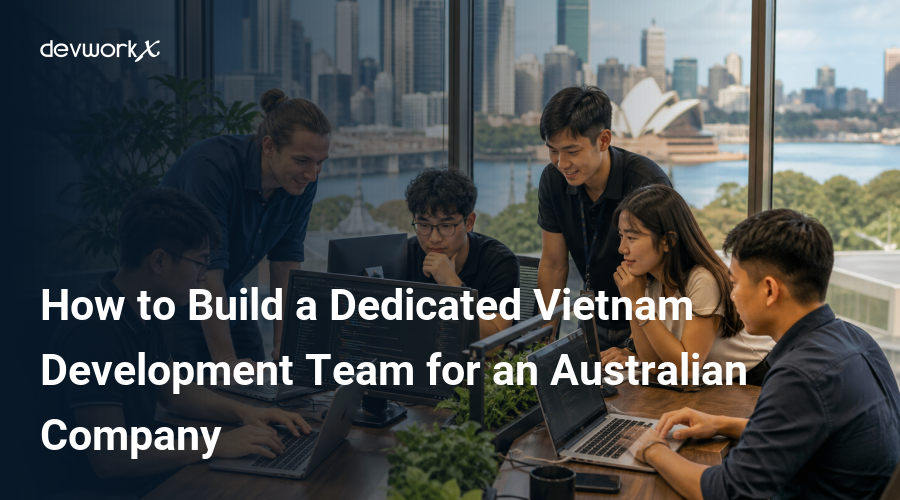
How to Build a Dedicated Vietnam Development Team for an Australian Company
For Australian companies seeking to build a dedicated development team in Vietnam, understanding the country's abundant talent pool, cost-effectiveness, and cultural compatibility is crucial. This detailed guide covers essential steps from defining project requirements to overcoming challenges, ensuring a successful and productive collaboration with Vietnamese developers. Leverage platforms like devworkx.com to connect with top-tier IT professionals and streamline your recruitment process.
Vietnam Software Outsourcing for Australian SMEs: Costs, Benefits and Risks
Australian SMEs are increasingly turning to Vietnam for software outsourcing due to the cost savings, skilled talent, and cultural compatibility. However, they must also navigate risks such as IP concerns and dependency on external partners. Platforms like devworkx.com can aid in connecting SMEs with reliable Vietnamese IT resources.

How Australian Startups Can Build Software Development Teams in Vietnam
With Vietnam's skilled tech workforce and cost advantages, Australian startups can effectively build software development teams by conducting thorough market research, leveraging local recruitment agencies, and fostering a strong company culture. Platforms like devworkx.com play a crucial role in connecting businesses with top tech talent, ensuring successful offshore team integration.


Why Australian Companies Are Outsourcing Software Development to Vietnam
Australian companies are increasingly outsourcing software development to Vietnam due to cost efficiency, a skilled workforce, and favorable time zone compatibility. Vietnam's supportive government policies and stable economic environment further enhance its appeal as an outsourcing destination. Discover how platforms like devworkx.com can connect you with top Vietnamese IT talent to drive your projects forward.

Vietnam Offshore Development for UK FinTech, SaaS and E-commerce Companies
Vietnam is emerging as a prime destination for UK companies in the FinTech, SaaS, and E-commerce sectors seeking offshore development solutions. By leveraging Vietnam's skilled talent pool, cost advantages, and strategic location, these companies can enhance their competitive edge. The support of platforms like DevWorkX further facilitates successful partnerships and efficient operations.