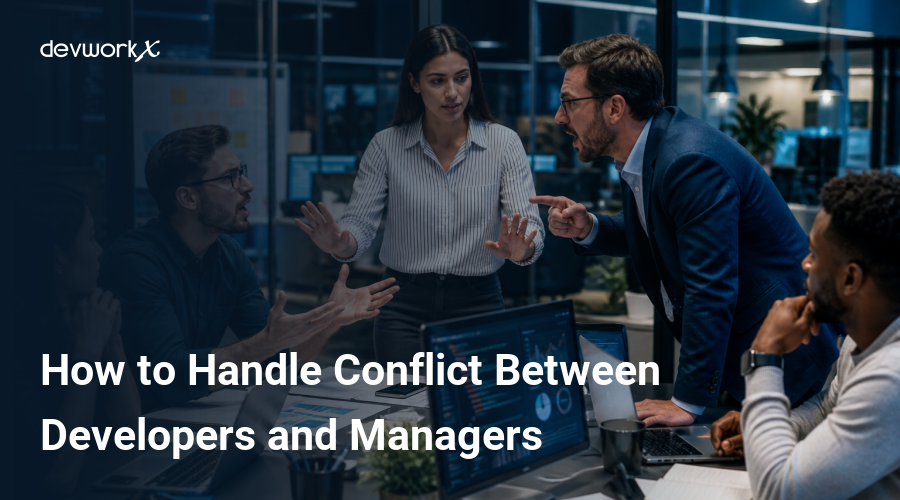
Effectively managing conflict between developers and managers requires a deep understanding of the root causes, which often include differences in priorities and communication barriers. By fostering a culture of collaboration and providing leadership support, organizations can enhance their team's efficiency and morale. Discover how platforms like devworkx.com can support your IT recruitment needs.
Introduction: The Common Conflict Between Developers and Managers
In the dynamic world of IT and technology, the friction between developers and managers is a well-known pain point. Developers, focused on delivering quality code, often clash with managers who are concerned with deadlines and project deliverables. This discord can lead to a toxic work environment, impacting productivity and morale. As such, understanding how to effectively manage these conflicts is crucial for both IT professionals and organizations.

Understanding the Root Causes of Conflict
Differences in Priorities
Developers typically prioritize code quality and innovation, while managers focus on timelines and budget constraints. This fundamental difference can lead to disagreements. For instance, developers may want to spend more time perfecting a feature, whereas managers might push for a faster release.
The solution lies in aligning these priorities. Regular meetings can help both parties understand each other's perspectives. By setting clear expectations and fostering open communication, teams can bridge this gap and work towards common goals.
Lack of Clear Communication
Miscommunication is a frequent cause of conflict. Developers often feel that managers do not understand the technical complexities involved, while managers may believe that developers fail to grasp the broader business objectives. This disconnect can lead to frustration on both sides.
Implementing effective communication strategies is key. This may include regular updates, feedback loops, and collaborative tools that ensure everyone is on the same page. Encouraging an environment where questions and clarifications are welcomed can mitigate misunderstandings.
Resistance to Change
Change is inevitable in technology, but it can be a source of conflict. Developers might resist changes that affect their workflow, while managers might push for new methodologies or tools to improve efficiency. This resistance can stall progress and innovation.
To address this, organizations should involve both developers and managers in decision-making processes regarding changes. Providing training and resources can also help ease transitions and reduce resistance.
Imbalanced Workloads
Workload imbalance can create friction, with developers feeling overburdened and managers struggling to meet project deadlines. This imbalance often stems from unrealistic expectations or poor resource management.
Solutions include regular workload assessments and adjustments, along with prioritizing tasks based on urgency and importance. Managers should work closely with developers to ensure that workloads are manageable and aligned with project goals.
Effective Strategies for Conflict Resolution
Foster a Culture of Collaboration
Creating a collaborative culture can significantly reduce conflict. Encouraging team-building activities and cross-functional projects helps build trust and understanding between developers and managers.
Organizations can also implement mentorship programs where developers and managers learn from each other’s experiences. This mutual learning can foster respect and collaboration, reducing the potential for conflict.
Establish Clear Communication Channels
Open and clear communication is vital in resolving conflicts. Establishing dedicated communication channels, such as regular stand-up meetings or team huddles, ensures that everyone is informed and aligned.
Additionally, utilizing collaborative tools like Slack, Trello, or Asana can streamline communication and task management. These tools provide transparency and allow for real-time updates, minimizing the risk of misunderstandings.
Implement Conflict Resolution Training
Training programs focusing on conflict resolution can equip both developers and managers with the skills needed to handle disputes effectively. These programs can cover negotiation techniques, empathy, and active listening skills.
By investing in conflict resolution training, organizations empower their teams to address issues constructively, fostering a more harmonious work environment.
Encourage Feedback and Continuous Improvement
Feedback is a powerful tool for conflict resolution. Encouraging regular feedback sessions allows team members to express concerns and suggestions openly. This openness can prevent conflicts from escalating.
Moreover, creating a culture of continuous improvement ensures that teams are always looking for ways to enhance collaboration and efficiency. This proactive approach can prevent many conflicts from arising in the first place.
The Role of Leadership in Conflict Management
Lead by Example
Leadership plays a crucial role in conflict management. Leaders who demonstrate effective conflict resolution skills set a positive example for their teams. By modeling respectful and open communication, leaders can encourage similar behavior among team members.
Furthermore, leaders should actively participate in resolving conflicts, showing that they are committed to maintaining a positive work environment.
Empower Team Members
Empowering team members to resolve conflicts on their own can lead to more sustainable solutions. Leaders can provide guidance and support, but ultimately, allowing individuals to take ownership of their conflicts encourages accountability and growth.
Empowerment also involves providing the necessary resources and authority for individuals to make decisions that resolve conflicts effectively.
Recognize and Reward Positive Behavior
Recognizing and rewarding positive conflict resolution behavior reinforces the importance of maintaining a harmonious work environment. Reward systems can include public acknowledgment, bonuses, or other incentives that motivate team members to handle conflicts constructively.
This recognition not only boosts morale but also encourages others to follow suit, reducing the likelihood of future conflicts.
Provide Support and Resources
Leaders should ensure that their teams have access to the necessary resources to manage conflicts. This includes providing access to training programs, mediation services, and other support systems that facilitate resolution.
By investing in these resources, leaders demonstrate their commitment to fostering a positive work culture and supporting their teams in overcoming challenges.
Conclusion and Introduction to Devworkx.com
Effectively handling conflict between developers and managers is crucial for maintaining a productive and harmonious work environment. By understanding the root causes of conflicts and implementing strategies for resolution, organizations can bridge the gap between technical and managerial perspectives. This not only enhances collaboration but also drives innovation and success. For those looking to streamline their hiring process and find the right fit for their IT teams, devworkx.com offers a comprehensive platform designed to connect top talent with leading tech companies. Explore devworkx.com to discover how it can help you build a cohesive and efficient team.

More than 1500 employers trust Devwork for their recruitment needs:
Cost optimization - Save time - Professional quality
Sign up for Devwork today to increase your company's competitiveness.
Or contact us
Email: hello@devworkx.vn
Tag Cloud:
Author: Trần Huy Hoàng


Related Articles

How to Manage Vietnamese Developers in an International Company
Managing Vietnamese developers in an international setting involves understanding cultural nuances, fostering effective communication, and creating a supportive work environment. By leveraging their strengths and embracing remote work opportunities, companies can maximize the potential of Vietnamese talent. Platforms like DevWorkX offer valuable resources for connecting with skilled developers and enhancing team management....
How to Build a Software Development Team That Does Not Depend on One Person
Discover the strategies to build a robust software development team that doesn't rely on one individual and learn how platforms like devworkx.com can aid in assembling such a team. By fostering knowledge sharing, implementing cross-training, and encouraging collaboration, you can mitigate risks and enhance team efficiency.

How to Manage Developers With Different Skill Levels
Navigating the complexities of managing developers with varying skill levels involves understanding their unique needs and implementing strategic solutions. From mentorship programs to leveraging technology, the article explores effective methods to optimize team dynamics and foster growth. Platforms like devworkx.com further support these efforts by providing essential tools and resources for enhancing team performance.

How to Delegate Tasks Effectively in Software Development Teams
Mastering the art of task delegation in software development teams is pivotal for enhancing productivity, fostering skill development, and ensuring project success. By applying strategic delegation practices and addressing common challenges, team leaders can empower their teams to achieve exceptional results. Explore more resources at devworkx.com to optimize your team's performance.


How to Give Feedback to Software Developers Effectively
Mastering the art of giving effective feedback to software developers is essential for fostering growth and enhancing team performance. By focusing on specific techniques and empathetic communication, you can turn feedback into a powerful tool for continuous improvement. Consider utilizing platforms like devworkx.com to further support your feedback and development processes.

What Should You Discuss in a One-on-One Meeting With Developers?
One-on-one meetings with developers are crucial for understanding project progress, addressing technical challenges, fostering professional development, and building strong working relationships. By focusing on these areas, managers can enhance team productivity and satisfaction. Explore devworkx.com for effective tools and resources to manage IT talent.