Managing different roles in a software development team is crucial for project success. This article explores the key roles and strategies for effective management, such as clear role definitions, effective communication, and conflict resolution. It also highlights the importance of leveraging tools and fostering a collaborative culture to enhance team productivity.
Understanding the Importance of Role Management in a Software Development Team
In the fast-paced world of software development, managing different roles within a team is crucial for the success of any project. The complexity of modern software projects requires a diverse set of skills and expertise, making it imperative to effectively manage team roles to ensure efficiency, collaboration, and high-quality output. Without proper role management, teams can face challenges such as miscommunication, redundant efforts, and project delays.
Defining Key Roles in a Software Development Team
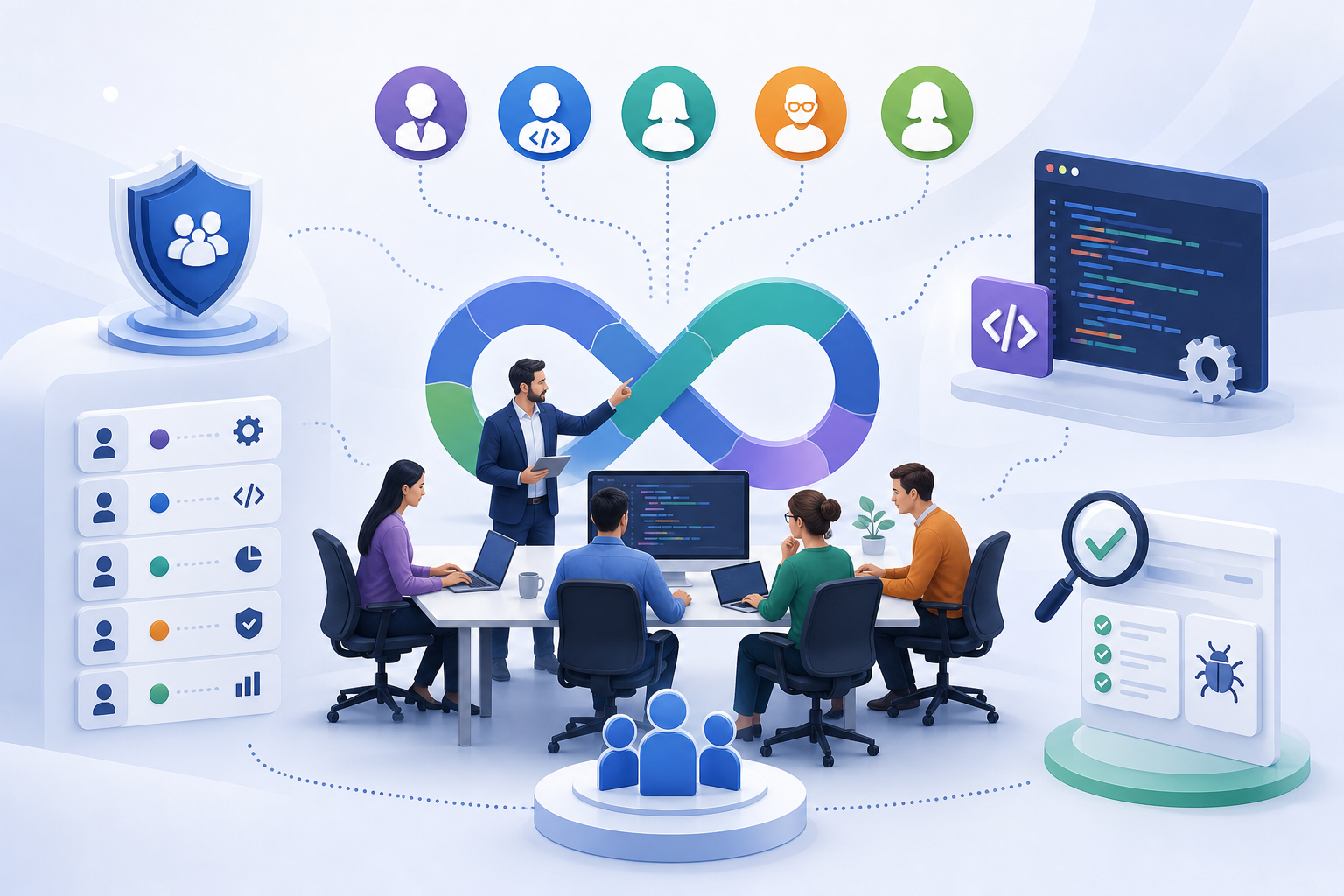
Understanding the key roles within a software development team is the first step to effective management. Each role has distinct responsibilities and requires specific skills to contribute to the project’s success.
Project Manager
- The Project Manager is responsible for planning, executing, and closing projects. They manage the team, allocate resources, and ensure project timelines and budgets are met.
- They act as a bridge between stakeholders and developers, ensuring that project requirements are clearly understood and communicated.
- Project Managers must possess strong leadership skills to motivate and guide the team towards achieving project goals.
- Risk management is also a critical part of their role, anticipating potential issues and devising mitigation strategies.
Software Developer
- Software Developers are the backbone of any development team, tasked with writing and maintaining code to build software applications.
- They need to be proficient in various programming languages and development tools, depending on the project requirements.
- Collaboration is key for developers, as they often work in teams to handle different parts of a project simultaneously.
- Continuous learning is essential for developers to keep up with the latest technologies and programming languages.
Quality Assurance (QA) Tester
- The QA Tester ensures that the software product meets the required quality standards before release.
- They design and execute test cases, identify bugs, and work closely with developers to resolve issues.
- QA Testers play a crucial role in maintaining the product’s reliability and performance.
- Attention to detail and analytical skills are vital for QA Testers to effectively identify and document issues.
UI/UX Designer
- UI/UX Designers focus on creating an intuitive and engaging user experience for the software application.
- They conduct user research, design wireframes, and create prototypes to test and refine the user interface.
- Designers need a strong understanding of user behavior and design principles to create visually appealing and functional interfaces.
- Collaboration with developers is essential to ensure that design concepts are feasible and align with technical requirements.
Strategies for Effective Role Management
Clear Role Definitions
Clearly defining roles and responsibilities is essential to avoid confusion and overlap in tasks. Each team member should have a comprehensive understanding of their duties and how they contribute to the overall project.
- Create detailed job descriptions for each role, specifying their responsibilities and required skill sets.
- Regularly review and update these descriptions to reflect changes in project needs or team structure.
- Ensure that team members are aware of each other’s roles to foster mutual respect and collaboration.
- Use tools like RACI matrices to map out roles and responsibilities clearly.
Effective Communication
Communication is the cornerstone of successful role management in software development teams. It helps in aligning the team towards common goals and facilitates problem-solving.
- Establish regular meetings and communication channels to keep everyone informed about project progress and updates.
- Encourage open communication where team members feel comfortable sharing ideas and concerns.
- Utilize project management tools like JIRA or Trello to enhance visibility and track tasks efficiently.
- Foster a culture of feedback, where constructive criticism is welcomed and used for improvement.
Skill Development and Training
Continuous learning and skill development are vital for adapting to new technologies and methodologies in software development.
- Provide opportunities for team members to attend workshops, seminars, and online courses relevant to their roles.
- Encourage knowledge sharing sessions within the team to leverage internal expertise and experience.
- Allocate time for team members to experiment with new tools and technologies that could benefit the project.
- Support career growth by setting individual development goals and providing mentorship.
Conflict Resolution
Conflicts are inevitable in any team, but effective management can prevent them from hindering productivity.
- Address conflicts promptly and fairly to prevent escalation and maintain team morale.
- Encourage open dialogue and mediation to resolve disputes amicably.
- Establish clear conflict resolution policies and ensure that team members are aware of them.
- Train leaders in conflict resolution techniques to handle issues effectively.
Leveraging Tools and Technologies for Role Management
Utilizing the right tools and technologies can significantly enhance role management in a software development team.
Project Management Tools
- Tools like Asana, Monday.com, and Basecamp help in planning, tracking, and managing project tasks and timelines.
- They provide a centralized platform for collaboration, document sharing, and communication among team members.
- These tools offer features like task assignment, progress tracking, and deadline reminders to keep the project on track.
- Customization options allow teams to tailor the tools according to their specific workflow and requirements.
Version Control Systems
- Version control systems like Git and SVN are essential for managing code changes and collaboration among developers.
- They allow multiple developers to work on the same project simultaneously without overwriting each other’s work.
- These systems provide a history of code changes, making it easier to track and revert to previous versions if needed.
- Integrating version control with continuous integration and deployment tools can streamline development workflows.
Communication Platforms
- Platforms like Slack and Microsoft Teams facilitate real-time communication and collaboration within the team.
- They offer features like messaging, video calls, and file sharing to enhance team interaction.
- Integrating these platforms with other tools like calendar and task management apps can improve productivity.
- Setting up dedicated channels for different projects or topics can help in organizing communication effectively.
Collaboration and Design Tools
- Tools like Figma, Adobe XD, and InVision are popular among designers for creating and sharing design prototypes.
- They allow designers to collaborate with developers and stakeholders by providing feedback and suggestions on design iterations.
- These tools offer features like version history, component libraries, and real-time editing to streamline design processes.
- Integration with project management tools can enhance workflow and ensure alignment between design and development teams.
Building a Collaborative and Productive Team Culture
Creating a positive team culture is essential for fostering collaboration and productivity in software development teams.
Encouraging Team Collaboration
- Promote a culture of collaboration by encouraging team members to work together on tasks and share knowledge.
- Organize team-building activities to strengthen relationships and build trust among team members.
- Encourage cross-functional collaboration to leverage diverse skills and perspectives.
- Recognize and reward team efforts to motivate and inspire continued collaboration.
Fostering Innovation
- Encourage a culture of innovation by providing a safe environment for experimentation and creative problem-solving.
- Allocate time for team members to explore new ideas and technologies that could benefit the project.
- Support innovative initiatives by providing resources and backing from leadership.
- Celebrate successful innovations to inspire continued creativity and risk-taking.
Promoting Work-Life Balance
- Ensure that team members maintain a healthy work-life balance to prevent burnout and enhance productivity.
- Offer flexible working hours or remote work options to accommodate personal commitments.
- Encourage regular breaks and time off to recharge and maintain mental well-being.
- Provide support and resources for managing stress and improving work-life harmony.
Developing Leadership Skills
- Identify potential leaders within the team and provide opportunities for leadership development.
- Offer mentorship and coaching to help individuals build their leadership capabilities.
- Encourage leaders to lead by example, demonstrating the values and behaviors expected from the team.
- Provide feedback and recognition to leaders to support their growth and development.
Introducing devworkx.com
For those in the software development industry looking to enhance their team management skills, devworkx.com offers a comprehensive platform that connects developers with the resources and opportunities they need to succeed. Whether you're a project manager seeking to optimize your team's workflow or a developer looking to expand your skill set, devworkx.com provides the tools and community support to help you achieve your goals.

More than 1500 employers trust Devwork for their recruitment needs:
Cost optimization - Save time - Professional quality
Sign up for Devwork today to increase your company's competitiveness.
Or contact us
Email: hello@devworkx.vn
Tag Cloud:
Author: Trần Huy Hoàng

Related Articles

How to Measure Developer Performance Without Micromanaging
Balancing developer performance measurement with autonomy is crucial in today's IT industry. This piece explores various strategies, from adopting objective metrics to fostering open communication, that can help managers measure performance effectively without resorting to micromanagement. For those in search of top IT talent, platforms like devworkx.com can facilitate connections with skilled developers....
How to Manage a Software Development Team in Vietnam
Effectively managing a software development team in Vietnam involves understanding the local work culture, leveraging the talent pool, and implementing robust project management practices. By addressing common challenges and fostering innovation, managers can lead their teams to success. Platforms like devworkx.com play a crucial role in facilitating IT recruitment, making it easier for companies to connect with top talent.

Vietnam EOR and Recruitment: How to Hire and Manage Local Talent
Navigating the complexities of hiring and managing IT talent in Vietnam is made easier with the help of an Employer of Record (EOR). By understanding the local market dynamics and leveraging platforms like devworkx.com, companies can effectively recruit and manage local talent, ensuring compliance and fostering growth in this vibrant tech hub.

EOR vs Recruitment Agency vs IT Outsourcing in Vietnam
Choosing between an EOR, recruitment agency, and IT outsourcing in Vietnam depends on your business needs. Each option offers distinct advantages in terms of cost, control, flexibility, and risk management. Discover how these solutions can impact your IT strategies and how Devworkx.com can enhance your recruitment process.

How to Hire Vietnamese Developers Through an EOR Provider
Hiring Vietnamese developers through an Employer of Record (EOR) provider offers a strategic advantage by combining cost-efficiency with technical expertise. This detailed guide explores the benefits and steps involved in leveraging EOR services for seamless international recruitment. Enhance your IT team by considering platforms like devworkx.com, designed to streamline the hiring process.
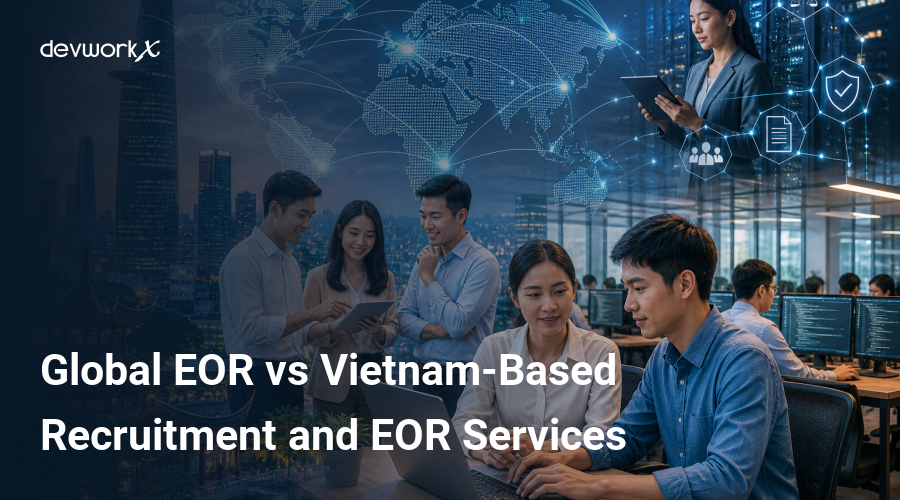
Global EOR vs Vietnam-Based Recruitment and EOR Services
Navigating the choice between Global EOR and Vietnam-based services is crucial for IT companies looking to expand. The article explores the complexities of compliance, cost, and talent management, offering insights into the benefits and challenges of each approach. Devworkx.com stands out as a valuable resource for IT recruitment, bridging companies with exceptional talent.