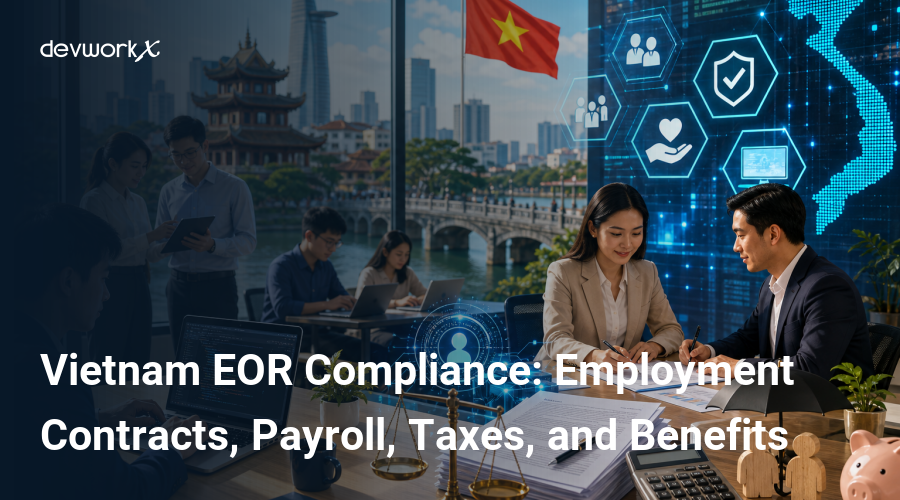
Navigating Vietnam's EOR compliance landscape involves understanding employment contracts, payroll, taxes, and benefits. This guide offers detailed insights into these areas, helping IT employers manage their operations effectively in Vietnam's dynamic market. For comprehensive support, devworkx.com is an excellent resource for handling recruitment and compliance challenges.
Understanding Vietnam EOR Compliance: A Guide for IT Employers
In the fast-paced world of IT and technology, companies often seek to expand their operations across borders, tapping into global talent pools. For IT employers or developers looking to venture into Vietnam, understanding the intricacies of Vietnam EOR compliance is paramount. The challenges of navigating employment contracts, payroll, taxes, and benefits can be overwhelming without the right guidance. This comprehensive guide delves into these aspects, offering clarity and actionable insights for businesses aiming to succeed in Vietnam’s thriving market.

Employment Contracts in Vietnam
Types of Employment Contracts
Vietnamese labor law recognizes several types of employment contracts, including indefinite-term, definite-term, and seasonal contracts. Each contract type has its nuances and requirements. Companies must ensure that the contract type aligns with the duration and nature of the employment relationship.
- An indefinite-term contract is preferred for ongoing roles without a fixed end date, offering stability to both employer and employee.
- Definite-term contracts are suitable for projects with a clear timeline and can range from 12 to 36 months.
- Seasonal contracts address temporary needs, often linked to seasonal workloads or specific short-term projects.
Legal Requirements and Clauses
Employment contracts in Vietnam must adhere to local labor regulations, which dictate specific clauses that need to be included. These include job description, salary, working hours, and conditions for termination. Ensuring these elements are clearly documented helps prevent disputes and ensures compliance.
- Job Description: Clearly define roles and responsibilities to avoid ambiguity.
- Salary and Benefits: Specify the agreed compensation and any additional benefits.
- Working Hours: Comply with the legal limit on working hours, which typically does not exceed 48 hours per week.
- Termination Conditions: Outline the conditions under which the contract can be terminated to protect both parties.
Probation Period
The probation period in Vietnam is another critical aspect of employment contracts. Typically, this period can last up to 60 days for most jobs, allowing employers to assess the new hire's capabilities.
- During probation, employers must pay at least 85% of the full salary.
- It's crucial to have a formal agreement regarding the probation period and its terms.
- Clear communication of performance expectations can lead to successful candidate evaluations.
- Employers should document any assessments made during this period to support employment decisions.
Common Pitfalls and Challenges
For foreign companies, common pitfalls in drafting employment contracts include language barriers and a lack of understanding of local labor laws. Engaging local legal experts can mitigate these risks and ensure that contracts meet all legal requirements.
- Misinterpretation of contract terms due to translation errors can lead to disputes.
- Non-compliance with local laws may result in fines or legal action.
- Ignoring cultural nuances can affect employer-employee relationships.
- Regular updates to labor laws necessitate ongoing compliance checks.
Payroll Management in Vietnam
Key Components of Payroll
Managing payroll in Vietnam involves several components, including calculating gross salary, deductions, and net pay. Employers must stay updated with the latest regulations to ensure accurate payroll processing.
- Gross Salary: The total amount before any deductions, as agreed in the employment contract.
- Deductions: Include personal income tax, social insurance, health insurance, and unemployment insurance.
- Net Pay: The final amount received by the employee after all deductions.
- Employers must keep detailed records of all payroll transactions for compliance and auditing purposes.
Compliance with Local Regulations
Vietnam has specific regulations governing payroll management, and non-compliance can lead to penalties. Companies must ensure that their payroll processes align with these rules, which include strict deadlines for tax submissions and insurance contributions.
- Monthly tax and insurance contributions must be submitted by the 20th of the following month.
- Employers need to register for tax and insurance contributions within 30 days of commencing operations.
- Failure to comply with submission deadlines can result in fines.
- Regular audits by local authorities necessitate accurate and timely payroll records.
Technology in Payroll Processing
Leveraging technology can streamline payroll processes, enhance accuracy, and ensure compliance. Many companies adopt payroll software to automate calculations, generate reports, and manage employee data efficiently.
- Automation reduces the risk of human error in payroll calculations.
- Software solutions can handle multiple currencies and comply with local tax structures.
- Real-time reporting aids in monitoring payroll expenses and maintaining transparency.
- Data security features protect sensitive employee information.
Challenges for IT Companies
For IT companies, the primary challenge in payroll management is adapting to rapid changes in employee numbers due to project-based hiring. Ensuring that payroll systems are flexible enough to accommodate such changes is crucial.
- Scalable payroll solutions can adapt to fluctuating workforce sizes.
- Ensuring compliance during rapid expansions requires diligent oversight.
- Project-based hiring necessitates clear communication of payroll terms with contractors.
- Managing payroll across multiple jurisdictions can complicate compliance efforts.
Taxation in Vietnam
Understanding Corporate Tax
Corporate tax in Vietnam is a significant consideration for companies operating in the country. The standard corporate tax rate is 20%, but various incentives and deductions may apply based on the industry and location.
- Companies in high-tech sectors may qualify for tax incentives.
- Understanding tax deductions, such as research and development expenses, is crucial for minimizing tax liability.
- Tax incentives are also available for businesses in special economic zones.
- Regular consultations with tax advisors can help navigate complex tax regulations.
Personal Income Tax for Employees
Employers must understand the personal income tax (PIT) obligations for their employees. The PIT rates in Vietnam are progressive, ranging from 5% to 35%, depending on income levels.
- Employers are responsible for withholding PIT from employees' salaries.
- Accurate calculation of PIT is essential to compliance and avoiding penalties.
- Expatriates may have specific tax obligations under double taxation agreements.
- Regular updates to tax rates necessitate ongoing compliance monitoring.
Value-Added Tax (VAT)
Businesses in Vietnam are subject to value-added tax (VAT), generally set at 10%. Understanding VAT implications is crucial for pricing strategies and financial planning.
- VAT is applicable to most goods and services, with some exceptions.
- Businesses must issue VAT invoices for taxable transactions.
- Accurate record-keeping of VAT transactions ensures compliance during audits.
- VAT refunds may be available for export activities.
Common Tax Compliance Issues
Common issues in tax compliance include incorrect tax filings, late submissions, and misunderstanding tax incentives. Engaging experienced tax advisors can mitigate these risks and ensure adherence to all legal obligations.
- Regular training for accounting staff can improve tax compliance.
- Utilizing tax software can streamline filing processes.
- Establishing clear internal procedures for tax compliance reduces errors.
- Proactive communication with tax authorities can resolve potential issues promptly.
Employee Benefits and Social Insurance
Mandatory Benefits
Vietnam mandates certain benefits for employees, including social insurance, health insurance, and unemployment insurance. These benefits are essential for ensuring employee welfare and are a legal requirement for all employers.
- Social Insurance: Covers sickness, maternity, occupational accidents, and retirement.
- Health Insurance: Provides access to healthcare services for employees.
- Unemployment Insurance: Offers financial support during periods of unemployment.
- Employers must contribute a percentage of the employee's salary to these insurance schemes.
Optional Benefits
Many companies offer additional benefits to attract and retain top talent. These may include private health insurance, performance bonuses, and professional development opportunities.
- Private health insurance can supplement state-provided health coverage.
- Performance bonuses incentivize productivity and align employee goals with company objectives.
- Professional development programs enhance skills and contribute to career growth.
- Flexible working arrangements can improve employee satisfaction and retention.
Compliance with Benefit Regulations
Ensuring compliance with benefit regulations requires understanding the legal obligations related to social insurance and other mandated benefits. Employers must regularly review their benefit offerings to ensure they meet legal requirements.
- Regular audits of benefit programs can identify and rectify compliance issues.
- Clear communication of benefits to employees enhances transparency.
- Employers should stay informed about changes in benefit regulations to maintain compliance.
- Documentation of employee benefits ensures clarity and legal protection.
Trends in Employee Benefits
As the employment landscape evolves, so do employee expectations regarding benefits. Companies that offer innovative and competitive benefits packages can gain a significant advantage in attracting top-tier talent.
- Remote work options have become increasingly popular and sought after.
- Wellness programs address employees' physical and mental health needs.
- Diversity and inclusion initiatives can enhance company culture and appeal.
- Offering stock options can align employee interests with company performance.
Introducing Devworkx.com
For IT companies navigating the complexities of Vietnam EOR compliance, platforms like devworkx.com provide invaluable support. Whether you're looking to hire top tech talent or need assistance with payroll and compliance, devworkx.com offers tailored solutions to meet your needs. By leveraging their expertise, businesses can focus on innovation and growth while ensuring they remain compliant with local regulations.

More than 1500 employers trust Devwork for their recruitment needs:
Cost optimization - Save time - Professional quality
Sign up for Devwork today to increase your company's competitiveness.
Or contact us
Email: hello@devworkx.vn
Tag Cloud:
Author: Trần Huy Hoàng


Related Articles
How to Hire a Vietnamese Software Engineer Without Opening a Company in Vietnam
Finding skilled Vietnamese software engineers without establishing a local company is highly achievable through methods like utilizing employment solutions, freelance platforms, and recruitment agencies. This article delves into practical strategies, ensuring companies can tap into Vietnam's rich talent pool effectively and efficiently. <div id="keywords-text">Vietnamese software engineer, hire without company, global employment solutions, freelance platforms, recruitment agencies...
Vietnam IT Recruitment and EOR: From Candidate Search to Employment
Exploring the dynamic world of IT recruitment in Vietnam, this article highlights the challenges and opportunities faced by employers and candidates alike. From leveraging EOR services to navigating cultural differences, the insights provided aim to equip stakeholders with strategies for successful hiring in this burgeoning tech hub.
Vietnam EOR for IT Companies: How to Build a Development Team
Navigating the challenges of building an IT development team in Vietnam can be streamlined through the Employer of Record (EOR) model. This solution helps companies manage legal compliance, cost efficiency, and HR management, while platforms like devworkx.com offer support in simplifying recruitment processes.
Vietnam EOR Cost vs Setting Up a Local Company
Navigating the decision between using an Employer of Record (EOR) service or setting up a local company in Vietnam requires careful consideration of cost, operational flexibility, and strategic objectives. This detailed analysis explores the benefits and challenges of each approach, providing insights to help tech companies make informed decisions. Discover how platforms like devworkx.com can enhance your recruitment strategy in this dynamic market.

How EOR Helps Startups Build Teams in Vietnam
In the dynamic landscape of Vietnamese IT recruitment, EOR services play a crucial role in helping startups navigate legal, cultural, and financial challenges. By providing compliance, cultural integration, cost efficiency, and scalability, EORs empower startups to build effective teams swiftly and with less risk. With platforms like devworkx.com, startups can further streamline their recruitment process and tap into Vietnam's rich tech talent pool.
How EOR Helps International Companies Hire Vietnamese Developers Faster
In a landscape where speed and efficiency are paramount, utilizing an Employer of Record (EOR) can be a game-changer for international companies looking to hire Vietnamese developers. EOR services simplify the recruitment process, ensure compliance with local laws, and offer cost-effective solutions that allow businesses to access Vietnam's burgeoning tech talent quickly. Platforms like devworkx.com further enhance this process by connecting companies with skilled developers seamlessly.