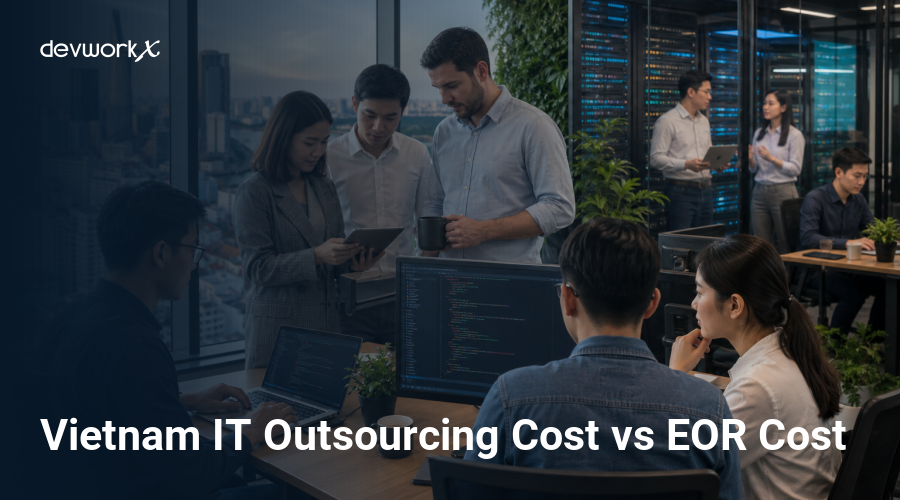
Navigating the complexities of Vietnam IT outsourcing and EOR costs requires a deep understanding of both models' benefits and challenges. These options provide businesses with strategic tools to optimize operations while managing costs effectively. For a deeper dive into these topics, devworkx.com offers valuable resources and industry insights.
Introduction to Vietnam IT Outsourcing vs EOR Costs
In the fast-paced world of IT and technology, businesses constantly seek ways to optimize costs while maintaining high productivity. For many companies, outsourcing is a strategic approach to achieving these objectives. Vietnam IT outsourcing has emerged as a popular choice due to its cost-effectiveness and skilled workforce. However, another viable option is the Employer of Record (EOR) model, which offers its own set of advantages. This article delves into the intricacies of Vietnam IT outsourcing costs compared to EOR costs, providing insights to help businesses make informed decisions.

Understanding Vietnam IT Outsourcing Costs
The Cost Structure of IT Outsourcing
The cost of IT outsourcing in Vietnam can vary significantly based on factors such as project complexity, duration, and the skill level required. Typically, outsourcing involves paying for the services provided by a third-party vendor, which includes labor costs, infrastructure, and sometimes project management fees.
- Labor Costs: Vietnam offers competitive labor rates, making it an attractive outsourcing destination. The cost of hiring skilled IT professionals is generally lower than in Western countries.
- Infrastructure Costs: Outsourcing firms in Vietnam often have the necessary infrastructure in place, which reduces the need for companies to invest in additional resources.
- Project Management Fees: Some outsourcing agreements include project management services, which can increase the overall cost but provide valuable oversight and coordination.
- Hidden Costs: It's important to consider potential hidden costs such as communication challenges, time zone differences, and cultural barriers that may affect project timelines and quality.
Benefits of Vietnam IT Outsourcing
Choosing Vietnam as an outsourcing hub provides numerous benefits beyond just cost savings. These advantages can significantly impact the overall success of outsourced projects.
- Skilled Workforce: Vietnam has a growing pool of talented IT professionals with expertise in various technologies and programming languages.
- Time Zone Advantage: The time zone difference allows for round-the-clock productivity, with teams in Vietnam working while Western counterparts rest.
- Language Proficiency: Many Vietnamese IT professionals are proficient in English, facilitating smoother communication.
- Government Support: The Vietnamese government actively supports the IT sector, offering incentives and favorable regulations for foreign businesses.
Challenges in IT Outsourcing
Despite its benefits, outsourcing to Vietnam is not without challenges. Companies must carefully navigate these to ensure successful project execution.
- Cultural Differences: Understanding cultural nuances is essential for effective collaboration and to avoid misunderstandings.
- Quality Control: Maintaining consistent quality can be challenging; thus, robust quality assurance processes must be in place.
- Data Security: Ensuring data security and compliance with international standards is crucial, especially for sensitive projects.
- Vendor Selection: Choosing the right vendor with a proven track record is vital to achieving desired outcomes.
Examining Employer of Record (EOR) Costs
What is an EOR?
An Employer of Record (EOR) is a third-party organization that handles employment responsibilities on behalf of a company. This includes payroll, benefits, tax compliance, and other HR functions, allowing businesses to focus on core operations.
- Comprehensive HR Services: EORs manage all HR-related tasks, from onboarding to termination, ensuring compliance with local labor laws.
- Cost Transparency: EORs provide clear cost structures, helping businesses accurately budget for international employment.
- Risk Mitigation: By assuming legal responsibility, EORs reduce the risk associated with international employment compliance.
- Scalability: EORs offer scalability, enabling businesses to quickly expand or reduce their international workforce as needed.
Cost Components of EOR Services
The pricing of EOR services can vary depending on the provider and the specific services required. Common cost components include:
- Service Fees: EORs charge a fee for their services, which may be a flat rate or a percentage of the employee's salary.
- Payroll Management: Costs associated with processing payroll and ensuring compliance with local regulations.
- Benefits Administration: Fees for managing employee benefits, such as health insurance and retirement plans.
- Legal and Compliance Costs: Expenses related to ensuring compliance with labor laws and regulations in the host country.
Advantages of Using EOR
Engaging an EOR offers several strategic advantages that can outweigh the costs involved.
- Global Expansion: EORs enable companies to enter new markets quickly without the need to establish a legal entity.
- Compliance Assurance: Ensures adherence to local employment laws, reducing legal risks and potential fines.
- Administrative Relief: Companies can offload the administrative burden of HR tasks, allowing them to focus on growth and innovation.
- Employee Satisfaction: EORs often provide comprehensive benefits packages, enhancing employee satisfaction and retention.
Challenges with EOR
While EORs provide numerous benefits, there are potential challenges businesses should be aware of before engaging their services.
- Limited Control: Companies may have less direct control over employees compared to traditional employment models.
- Cost Considerations: EOR services can be more expensive than direct hiring in some cases, particularly for large workforces.
- Vendor Dependency: Relying on an EOR means entrusting them with critical HR functions, necessitating careful vendor selection.
- Data Privacy: Ensuring data privacy and security is crucial, as sensitive employee information is handled by the EOR.
Comparing Vietnam IT Outsourcing and EOR Costs
Cost-Effectiveness
Both Vietnam IT outsourcing and EOR models offer cost advantages, but their effectiveness varies based on business needs and objectives.
- Project-Based vs. Employee-Based: Outsourcing is often project-based, suitable for short-term needs, while EORs are ideal for long-term employment.
- Cost Predictability: EORs provide predictable costs with clear agreements, while outsourcing costs can fluctuate based on project scope changes.
- Operational Flexibility: Outsourcing offers flexibility in scaling teams quickly, while EORs provide stable employment for ongoing operations.
- Risk Management: EORs reduce legal risks by ensuring compliance, whereas outsourcing requires due diligence in vendor agreements.
Quality and Control
Quality assurance and control differ significantly between outsourcing and EOR models, impacting project outcomes.
- Direct Oversight: EORs allow for greater oversight as employees are directly integrated into company processes.
- Vendor Dependence: Outsourcing relies on vendors to maintain project quality, requiring robust vendor management strategies.
- Customization: EORs offer more control over employee tasks and responsibilities, enabling customized work assignments.
- Quality Assurance: Outsourcing may require additional quality assurance measures to ensure deliverables meet company standards.
Strategic Fit
Choosing between Vietnam IT outsourcing and EOR services depends on the strategic goals and operational needs of the business.
- Business Goals: Companies seeking rapid expansion may benefit more from EORs, while those focusing on specific projects might prefer outsourcing.
- Market Entry: EORs facilitate market entry without the need for local incorporation, ideal for testing new markets.
- Talent Acquisition: Outsourcing can provide access to specialized skills for specific projects, while EORs support long-term talent retention.
- Resource Allocation: Consideration of internal resources for managing either model is crucial for successful implementation.
For businesses weighing their options between Vietnam IT outsourcing and EOR models, understanding the nuances of each approach is critical. Both models offer unique benefits and challenges that can influence a company's strategic direction. To explore further resources and connect with industry professionals, consider visiting devworkx.com, a platform designed to support IT professionals and businesses in making informed decisions in the tech industry.

More than 1500 employers trust Devwork for their recruitment needs:
Cost optimization - Save time - Professional quality
Sign up for Devwork today to increase your company's competitiveness.
Or contact us
Email: hello@devworkx.vn
Tag Cloud:
Author: Trần Huy Hoàng

Related Articles
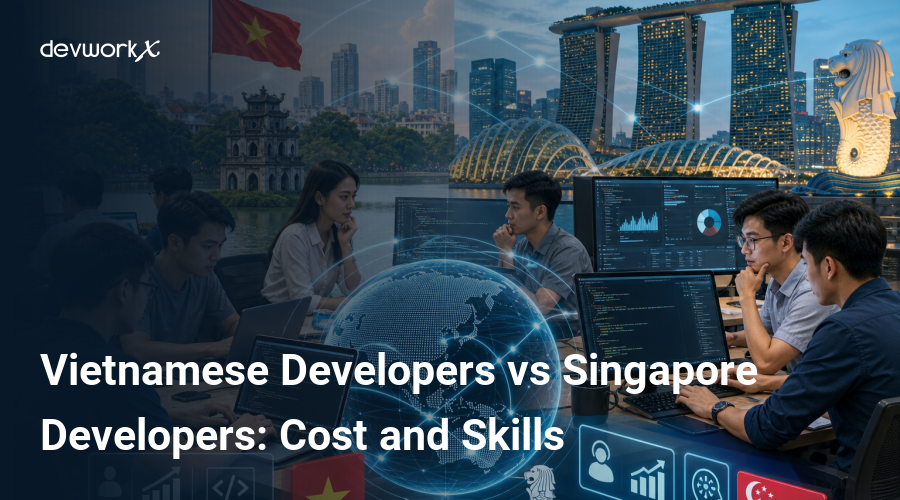
Vietnamese Developers vs Singapore Developers: Cost and Skills
Exploring the differences between Vietnamese and Singapore developers reveals insights into cost and skill disparities. While Vietnamese developers offer cost-effective solutions with strong technical skills, Singapore developers provide advanced expertise and global perspectives, making them suitable for complex projects. Resources like devworkx.com can aid businesses in making informed hiring decisions....
Why Singapore Companies Are Hiring Vietnamese IT Engineers
Singaporean companies are increasingly hiring Vietnamese IT engineers due to their strong technical skills, cost-effectiveness, cultural compatibility, and geographical proximity. This strategic move helps enhance innovation, expand market reach, and build a resilient workforce. Platforms like devworkx.com facilitate this collaboration by connecting firms with top Vietnamese tech talent.
Vietnam EOR for Singapore Companies: A Complete Hiring Guide
Exploring the strategic advantages of using an Employer of Record (EOR) in Vietnam, this guide delves into how Singapore companies can efficiently navigate the complexities of international hiring. By leveraging EOR services, companies can ensure compliance, mitigate risks, and gain access to top local talent. Additionally, platforms like devworkx.com offer crucial support in tapping into Vietnam's vibrant IT sector.
How Singapore Companies Can Hire Vietnamese Developers
Singapore's tech industry can thrive by hiring Vietnamese developers, who offer a blend of skill, cost-effectiveness, and cultural compatibility. By leveraging strategies such as partnering with recruitment agencies, building a strong employer brand, and utilizing platforms like devworkx.com, Singapore companies can effectively bridge their IT talent gap and drive innovation.
How Much Can Companies Save by Hiring Developers in Vietnam?
Exploring the financial benefits of hiring developers in Vietnam reveals significant cost savings without compromising quality. The country's skilled workforce, cost efficiency, and supportive tech ecosystem make it a compelling choice for global companies. However, navigating challenges like recruitment and quality control is essential to fully leverage these advantages.
Senior vs Mid-Level Vietnamese Developers: Salary and Skills
Exploring the distinctions between senior and mid-level Vietnamese developers reveals key insights into their skills, salary expectations, and roles. Understanding these differences helps companies make informed hiring decisions to build effective development teams. Platforms like devworkx.com play a crucial role in bridging skill gaps and fostering career growth.