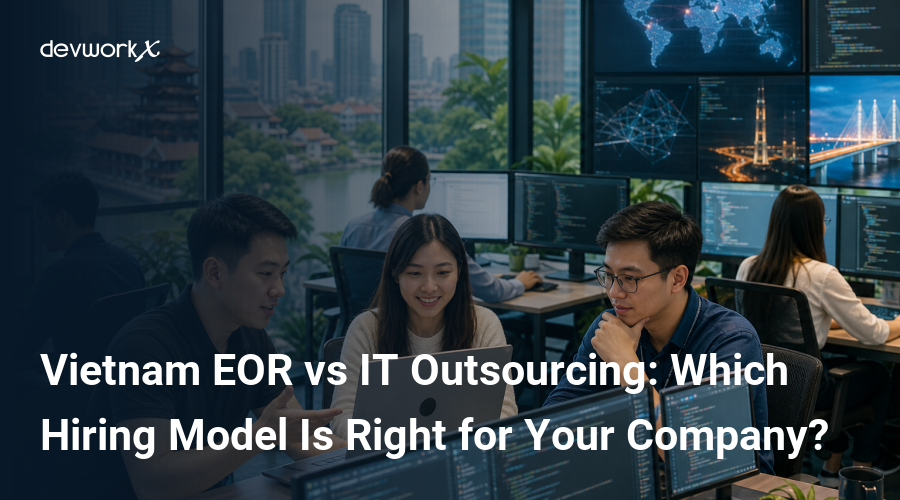
This article explores the differences between the Employer of Record (EOR) and IT outsourcing models in Vietnam, providing an in-depth analysis of their advantages, challenges, and suitability for different business needs. It serves as a guide for IT managers and recruiters to make informed hiring decisions in the Vietnamese tech industry.
Introduction: Navigating the Complexities of Hiring Models in Vietnam
In the ever-evolving landscape of IT recruitment, companies are constantly seeking the most efficient and cost-effective ways to build their teams. With the rapid growth of the tech industry in Vietnam, businesses are presented with a unique dilemma: should they opt for an Employer of Record (EOR) service or invest in IT outsourcing? This decision is crucial as it directly impacts operational efficiency, cost management, and the ability to scale. Understanding the nuances of each model can be a game changer for IT managers and recruiters aiming to make informed hiring decisions in Vietnam.
Understanding the Employer of Record (EOR) Model
What is an Employer of Record?
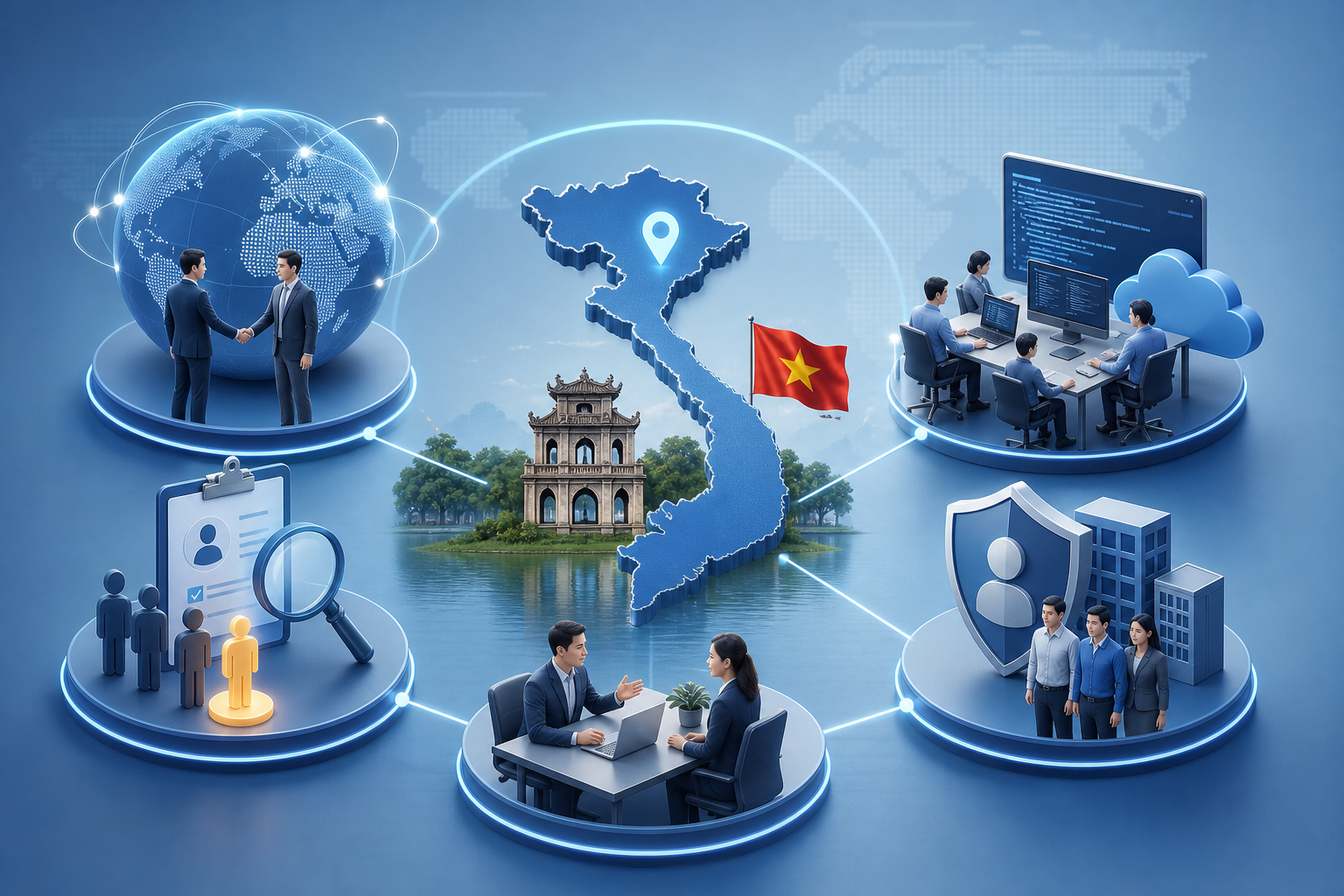
An Employer of Record is a third-party organization that takes on the responsibility of employing staff on behalf of another company. This model is gaining traction in Vietnam due to its ability to simplify the complexities of hiring and managing employees in a foreign market.
- Compliance and Legal Responsibility: The EOR handles all compliance and legal responsibilities related to employment, ensuring that companies adhere to local labor laws.
- Cost Efficiency: By outsourcing payroll and HR management, companies can reduce overhead costs associated with maintaining an internal HR department.
- Risk Management: The EOR assumes liability for employment risks, which can be particularly advantageous for companies unfamiliar with Vietnam's legal landscape.
- Flexibility: Businesses can scale their workforce up or down with relative ease, allowing for greater agility in response to market demands.
Advantages of Using an EOR in Vietnam
Beyond simplifying compliance, an EOR offers several strategic advantages for companies seeking to establish or expand their presence in Vietnam.
- Speed to Market: Companies can quickly enter the Vietnamese market without the need to establish a legal entity, significantly reducing time to market.
- Focus on Core Business: By offloading administrative burdens, companies can concentrate on their core competencies and strategic initiatives.
- Scalability: The ability to rapidly scale operations without the constraints of traditional hiring processes is a significant advantage in the fast-paced tech industry.
- Local Expertise: EOR providers possess in-depth knowledge of local labor laws and market conditions, providing invaluable insights and guidance.
Challenges of the EOR Model
While the EOR model offers numerous benefits, it is not without its challenges, particularly for companies with specific operational needs.
- Limited Control: Companies may have less direct control over their employees, which can be a drawback for businesses requiring a hands-on management approach.
- Cost Considerations: Although it can be cost-effective in some cases, the fees associated with EOR services can add up, particularly for larger teams.
- Long-term Viability: For companies planning significant, long-term operations in Vietnam, establishing a local entity might eventually be more economical.
- Reputation Risk: Relying on a third party for employment can pose risks to a company's reputation if the EOR provider does not uphold high standards.
Exploring IT Outsourcing in Vietnam
What is IT Outsourcing?
IT outsourcing involves contracting out specific IT services or projects to external vendors. This model is particularly appealing to companies looking to leverage specialized skills and reduce costs.
- Access to Talent: Vietnam is home to a large pool of skilled IT professionals, making it an attractive destination for outsourcing software development and other technical tasks.
- Cost Savings: Outsourcing can significantly reduce costs associated with hiring and training in-house staff, particularly for short-term or specialized projects.
- Focus on Core Activities: By outsourcing IT functions, companies can allocate more resources to core business activities and strategic initiatives.
- Scalability and Flexibility: Outsourcing provides the flexibility to scale resources up or down based on project requirements and business needs.
Benefits of IT Outsourcing in Vietnam
The decision to outsource IT functions in Vietnam can yield numerous benefits, particularly for companies looking to enhance their technological capabilities.
- Specialized Expertise: Outsourcing partners often bring specialized skills and industry expertise, leading to higher quality outcomes for complex projects.
- Enhanced Focus: By outsourcing non-core functions, companies can focus on their primary business objectives and improve overall efficiency.
- Time Savings: Outsourcing can accelerate project timelines by leveraging the expertise and resources of external vendors.
- Risk Mitigation: Outsourcing can help mitigate risks associated with technology development and deployment, thanks to the experience and best practices of seasoned vendors.
Challenges of IT Outsourcing
Despite its advantages, IT outsourcing presents certain challenges that companies must carefully consider before making a decision.
- Communication Barriers: Differences in language and time zones can lead to communication challenges, potentially impacting project outcomes.
- Quality Control: Maintaining quality control can be challenging when outsourcing critical IT functions to external vendors.
- Dependency Risks: Over-reliance on external vendors can create dependency risks, particularly if a vendor's performance does not meet expectations.
- Data Security Concerns: Outsourcing IT functions can expose companies to data security risks, necessitating robust data protection measures and agreements.
Vietnam EOR vs. IT Outsourcing: Key Differences
Operational Control and Flexibility
The level of operational control and flexibility varies significantly between the EOR and IT outsourcing models.
- EOR Model: Offers more control over individual employees but may limit flexibility in managing specific projects or tasks.
- IT Outsourcing: Provides greater flexibility in managing projects but less control over individual team members and day-to-day operations.
- Strategic Alignment: Companies must assess their strategic goals to determine which model aligns better with their operational needs.
- Decision-Making: The choice between EOR and IT outsourcing often hinges on the desired level of involvement in day-to-day operations.
Cost Implications
Cost considerations play a crucial role in deciding between an EOR and IT outsourcing model.
- EOR Model: May involve higher upfront costs but offers long-term savings by reducing administrative burdens.
- IT Outsourcing: Generally offers lower initial costs but can become more expensive over time, depending on the scope and duration of the project.
- Budget Constraints: Companies must evaluate their budget constraints and long-term financial goals when choosing a model.
- Hidden Costs: Both models may have hidden costs associated with compliance, training, and oversight, which should be carefully examined.
Compliance and Legal Considerations
Compliance and legal considerations are paramount when operating in a foreign market like Vietnam.
- EOR Model: Simplifies compliance by transferring legal responsibilities to the EOR provider, reducing the risk of legal issues.
- IT Outsourcing: Requires careful management of contracts and agreements to ensure compliance with local regulations and data protection laws.
- Regulatory Changes: Companies must stay informed about regulatory changes that could impact their chosen hiring model.
- Risk Management: Legal and compliance risks must be carefully managed to protect the company's interests and reputation.
Strategic Fit for Business Goals
Ultimately, the decision between EOR and IT outsourcing hinges on how well each model aligns with the company's strategic goals.
- Long-Term Objectives: Companies with long-term goals in Vietnam may prefer the EOR model for its stability and compliance benefits.
- Project-Based Needs: IT outsourcing is ideal for companies with specific, project-based needs that require specialized expertise.
- Scalability Requirements: Businesses with dynamic scalability requirements must carefully evaluate which model offers the flexibility they need.
- Market Positioning: The chosen model should support the company's market positioning and competitive advantage in the tech industry.
Introducing Devworkx.com
For companies navigating the complexities of hiring in Vietnam's tech industry, Devworkx.com offers a comprehensive solution. As a leading platform for IT recruitment and outsourcing, Devworkx.com connects businesses with top-tier talent and reliable outsourcing partners. Whether you're considering the EOR model or IT outsourcing, Devworkx.com provides the tools and expertise needed to make informed decisions and achieve your strategic hiring goals.

More than 1500 employers trust Devwork for their recruitment needs:
Cost optimization - Save time - Professional quality
Sign up for Devwork today to increase your company's competitiveness.
Or contact us
Email: hello@devworkx.vn
Tag Cloud:
Author: Trần Huy Hoàng

Related Articles
Cost of Hiring Remote IT Engineers in Vietnam
This article delves into the costs associated with hiring remote IT engineers in Vietnam, examining economic factors, hiring processes, work culture, and salary landscapes. It provides valuable insights for companies considering Vietnam as a destination for IT outsourcing....
How Much Does It Cost to Hire a Developer in Vietnam?
This article provides an in-depth analysis of the costs associated with hiring developers in Vietnam, examining factors such as skill level, location, and industry demand. It also explores additional expenses like recruitment and training, while highlighting platforms like devworkx.com that facilitate cost-effective hiring.
How to Build a Remote Vietnamese Team Using EOR
This article provides a comprehensive guide on building a remote Vietnamese team using Employer of Record (EOR) services. It explores the benefits, steps involved, challenges, and solutions while highlighting the role of devworkx.com in IT recruitment.
Vietnam EOR for IT Companies: Hire and Manage Vietnamese Engineers
This article explores the benefits and intricacies of using an Employer of Record (EOR) to hire and manage Vietnamese IT engineers. It delves into Vietnam's appeal as a tech hub, key considerations for hiring, and best practices for managing remote teams, offering insights for companies looking to expand their workforce in Vietnam.
How EOR Helps Companies Hire Remote Employees in Vietnam
This article explores how Employer of Record (EOR) services facilitate the hiring of remote employees in Vietnam by addressing regulatory complexities, cultural differences, and talent competition. It highlights the benefits of using EORs, such as compliance assurance, cost-effective solutions, and access to a diverse talent pool, while offering guidance on selecting the right EOR partner.
Vietnam EOR vs Direct Hiring: What Is the Difference?
This article delves into the differences between Vietnam EOR and direct hiring, providing a detailed analysis for businesses to make informed decisions. It explores the benefits and challenges of each method, offering scenarios where each might be preferable.